In a region known worldwide for its white wines, the two wines that best represent the Colli Orientali del Friuli are a stubborn red and an extremely rare sweet wine. Neither is easy to handle: one requires nearly five years before it’s ready to leave the cellar, while the other yields so few grapes that, on paper, growing it wouldn’t be worth the effort.
They’ve survived because someone decided they were worth it. Here’s who they are, why they belong to these hills more than any other grape variety, and how to taste them to truly understand them.
The first written record appears in a document from 1398, but the modern history of Pignolo began in the 1970s, among the vineyards of the Abbey of Rosazzo, when a few winemakers decided to save a grape variety that the market was pushing to extinction. Among them were Domenico Casasola, who recovered the vine, and Girolamo Dorigo, who cultivated it with dedication on the hills of Montsclapade—the very hills we have been stewarding since 2012.
The name comes from the grape cluster, which is as compact as a pinecone, with tiny berries measuring about one centimeter. It yields little, ripens late, and is austere when young: it requires at least 48 months in French oak barriques and another six months in the bottle to round out its edges. In the glass, it is an almost impenetrable ruby red, with notes of leather, coffee, charred wood, black cherry jam, black pepper, and licorice, and vigorous tannins balanced by a savory density.
How rare is it? About 56,000 bottles are produced each year in total. If you’re looking for a Pignolo—the Friulian wine you should try at least once— a visit to the winery is still the easiest way to experience it.
Picolit is the other side of the same stubbornness. It is a native grape variety that has been accurately documented since 1750, when it won over the European courts, and is now protected by the Colli Orientali DOCG designation.
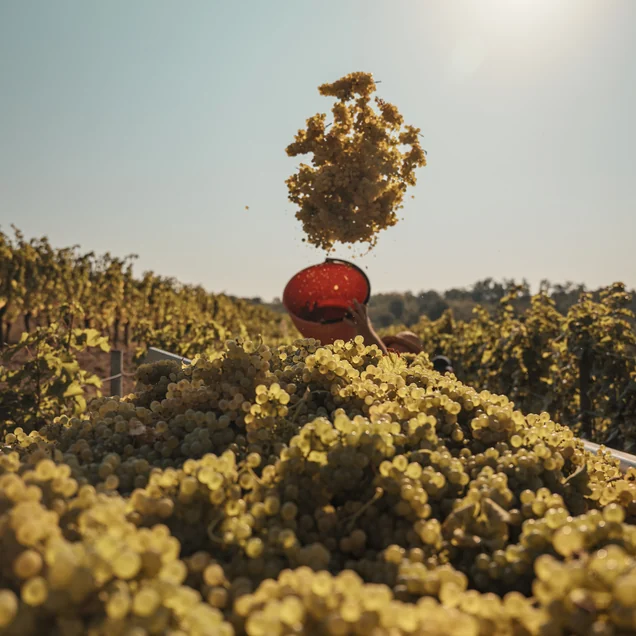
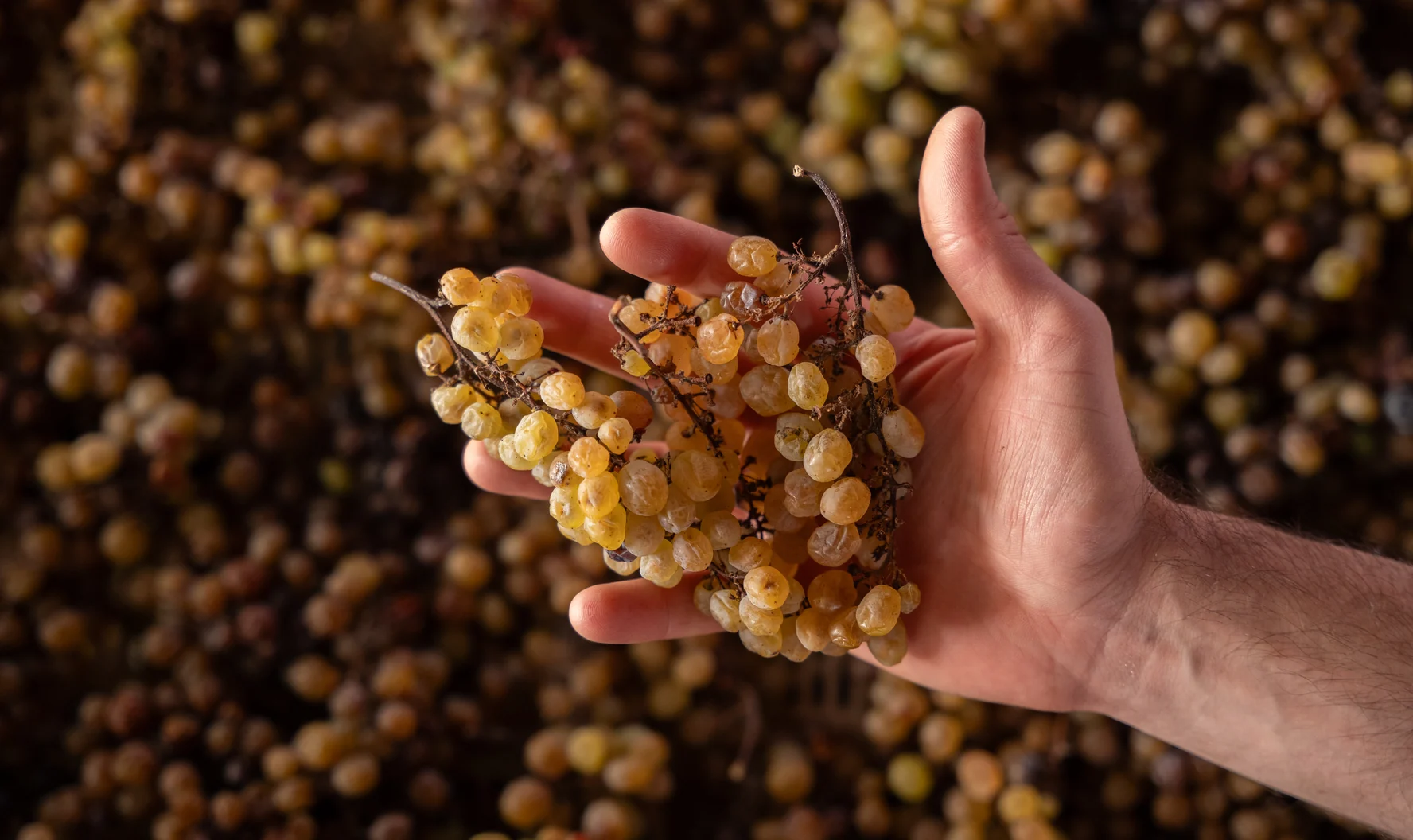
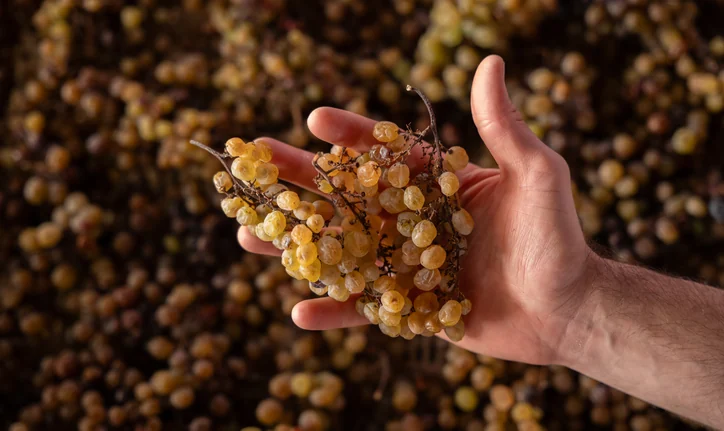
Its uniqueness is also its problem: many flowers fail to set fruit, and the cluster reaches maturity with very few berries. Few grapes, a lot of hard work. The bunches are harvested by hand in late September, placed in crates, and left to dry naturally outdoors for about two months; then they undergo gentle pressing, fermentation in stainless steel, and over thirty months of aging in oak before bottling in 375-ml bottles.
The result is a brilliant gold color with amber highlights, featuring notes of sultanas, dates, dried apricots, and honey. On the palate, it is sweet yet crisp, supported by acidity and minerality: a long finish that never grows tiresome. This is not just any after-dinner wine—it is a meditation wine.
Because they don’t exist anywhere else—or almost nowhere else. Both have their roots in the ponca, the Eocene marl that makes up the soil here, on hills ranging from 100 to 200 meters in height, which we describe in detail on the Terroir page. It is the daily temperature variation in this area that gives the Pignolo its structure and the Picolit its acidity, which prevents it from becoming cloying.
And then there's the human aspect: they survived an era when the market demanded more productive and easier-to-grow grape varieties, and they persevered because some families chose continuity over convenience.
Serve it at 18 °C in a large wine glass, and open the bottle at least an hour in advance. It pairs well with hearty grilled meats, large game, and aged cheeses.
Picolit is best enjoyed at 10–12 °C, in a small glass and in small portions: just a few centiliters are enough. The most interesting pairing isn’t with a sweet dessert, but rather the contrast with blue-veined or aged, tangy cheeses. It’s also excellent with dry pastries or on its own.
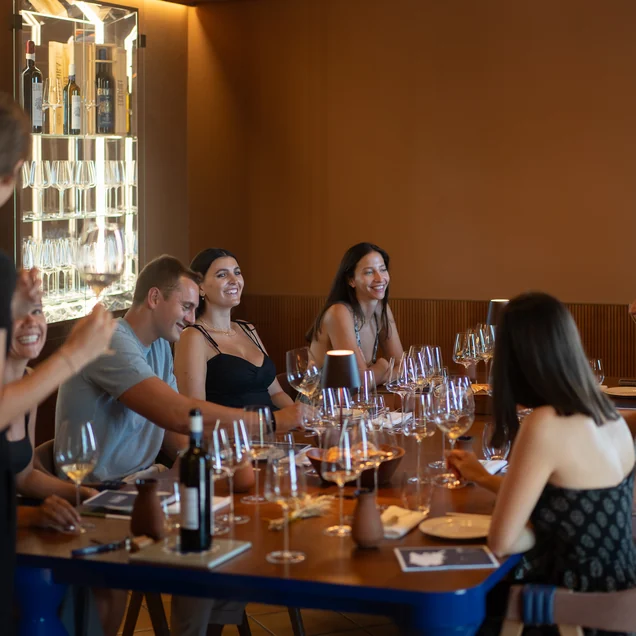
Reading about them is one thing; tasting them is quite another. “Intimate Pairings” is our experience designed specifically for this purpose: a tour of the winery followed by four unexpected flavors, carefully crafted to bring out the best in the wines that accompany them—a tasting of four native and international wines from the Colli Orientali, each paired with a custom-selected dish. Two hours, starting at €45, enjoyed at a leisurely pace around the table.
Discover "Abbinamenti in confidenza," or check out all of our experiences.
And if you’re thinking of someone else when it comes to Picolit: a tasting experience makes a great gift. The gift certificate is worth between €10 and €30, arrives via email in just a few minutes, has no expiration date, and the recipient can take their time choosing which experience to enjoy.